
10-23-2026 — Forward and Failures
Howdy all. The daze just keep on continuing. The norm seems to be upper 30s to start the day, reaching 60 with plenty of sunshine, and lower winds. Trees are dropping leaves, and they pile up at the entrances of the house. As for me, I seem to be cycling back and forth from zero to minimal sleep, and exhaustion, and some sleep and minor energy surges. I keep trying to get things done around the house. But not succeeding much.
For example, even with a pipe wrench, and a set of adjustable pliers, I can not remove the old shower head in the second bathroom upstairs. Not sure how I’ll make that happen. Maybe I will hire a handyman to do it.
I also got a battery version of a saws-all to attack the framework of aluminum trellises in the back garden beds, but don’t have the energy to go do it.
I did fix an issue with the security camera in the garage that turned out to be a GFCI outlet having flipped when I was adding the battery to the DPUX stack. I hadn’t even realized that the outlet had a GFCI button. And I replaced another outdoor camera/flood light setup that was one of the original ones I added when I moved in here.
And I did get out long enough to blow the leaves from the entrances to the grass, prior to the lawn mowing on Wednesday. Even pulled out weed killer spray and did the perimeter of flower beds / walkways / driveway / fences. The lawn service guy says he may do one more cut next week for the year. Stopping a little early this year because of the weather. Dry and cool. Not much growth in the grass or weeds throughout the yard.
I pulled out the slow-cooker last week and used it one day for some pork and sauerkraut. That was good. Then I tried a 15-bean soup with ham (pork) hocks, and vegetables. That was not so good.
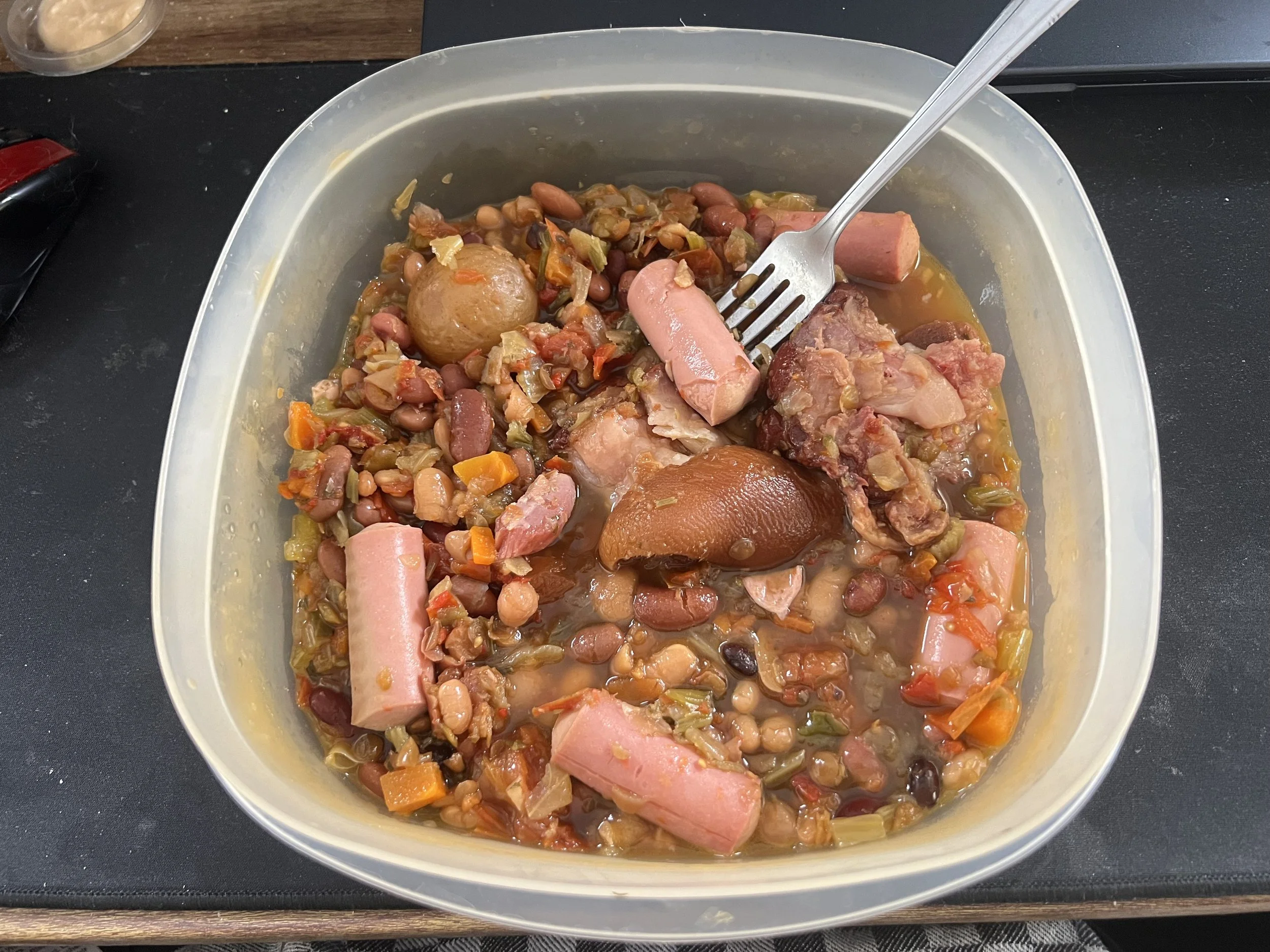
Because the hocks were basically useless for meat, I got desperate and tossed a can of Vienna Sausages in for meat.
The first day, after cooking for 8 hours, the beans were still like rocks, and the hocks were leather covered concrete. And, Yes, I did soak the beans overnight first. The second day, after another 3 ½ hours or so of slow cooking, the beans were mush, and the hocks fell apart into chunks of slime and a variety of sized bones. I was able to find most of them and remove them, but some were nickle or dime sized.
When I gave up trying to eat the very tasty mush, I thought I’d just remove the solids, and keep the broth. That was another failure, as some of the bones evaded my attempts to remove them prior to sending the mush down the garbage disposal. The disposal made some very unhappy sounds as the bones tried to destroy the blades. And to top it off, when I lifted the cooking bag from the pot, to pour the broth into a container, it ripped, sending the only good portion of the soup, all over the counter, down into the sink, and over the cupboards, onto the floor.
I won’t try bean soup in the cooker again. I’ll stick to the stove for them. I have better control. And screw hocks. I’ll use chunks of ham instead.
The thought behind the bean soup was to add more fiber and protein into my diet to get my energy flowing again. On that note, I also decided to try overnight oats for breakfast. I’ve had omelettes (microwaved mostly) for almost every breakfast over the last 10 years or so. I recently got tired of them and have been searching for something different. A friend suggested the overnight oats. Sure. Why not?
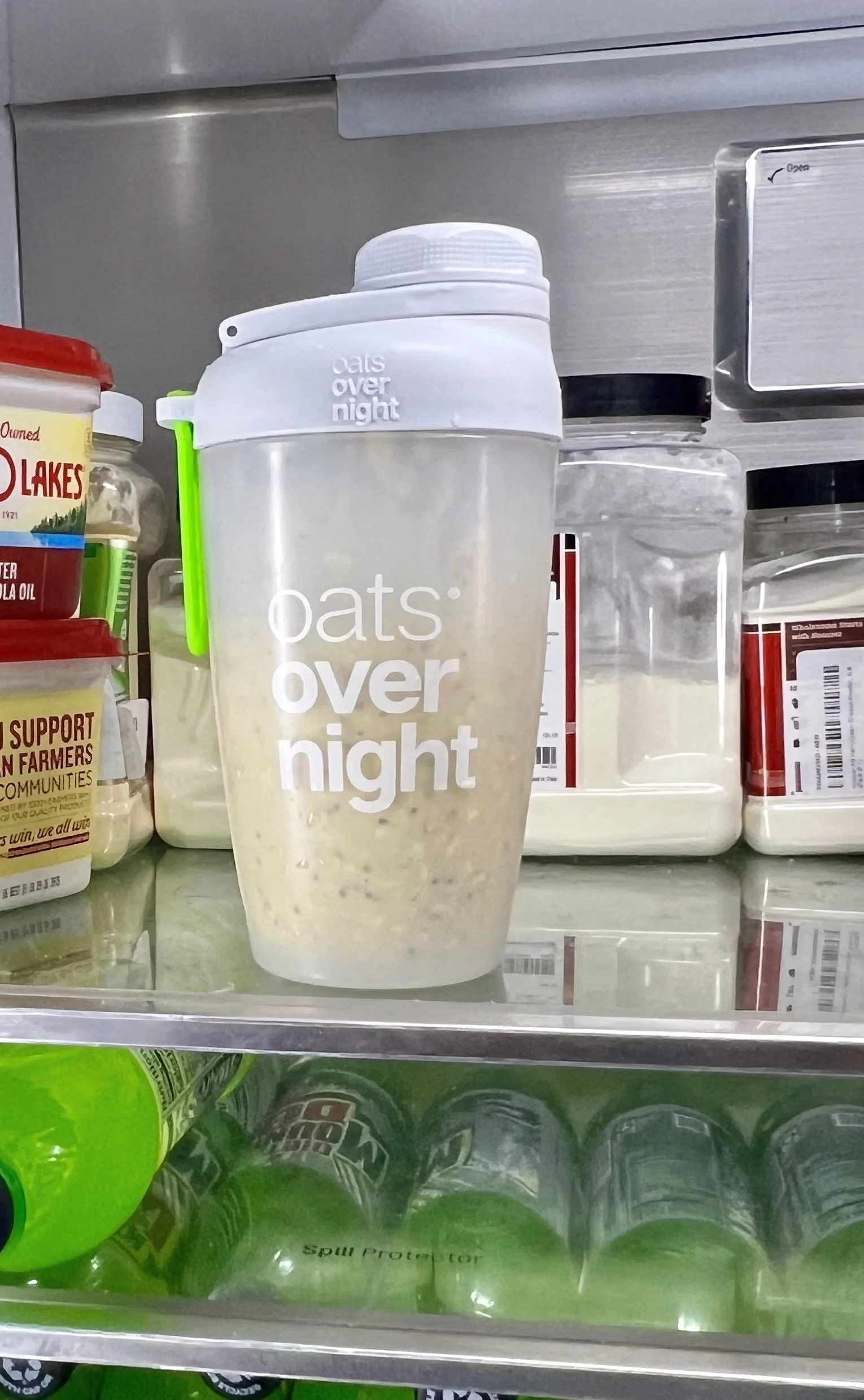
I ordered a variety pack from Amazon that came with its own shaker cup. First try was a blueberry cream one.
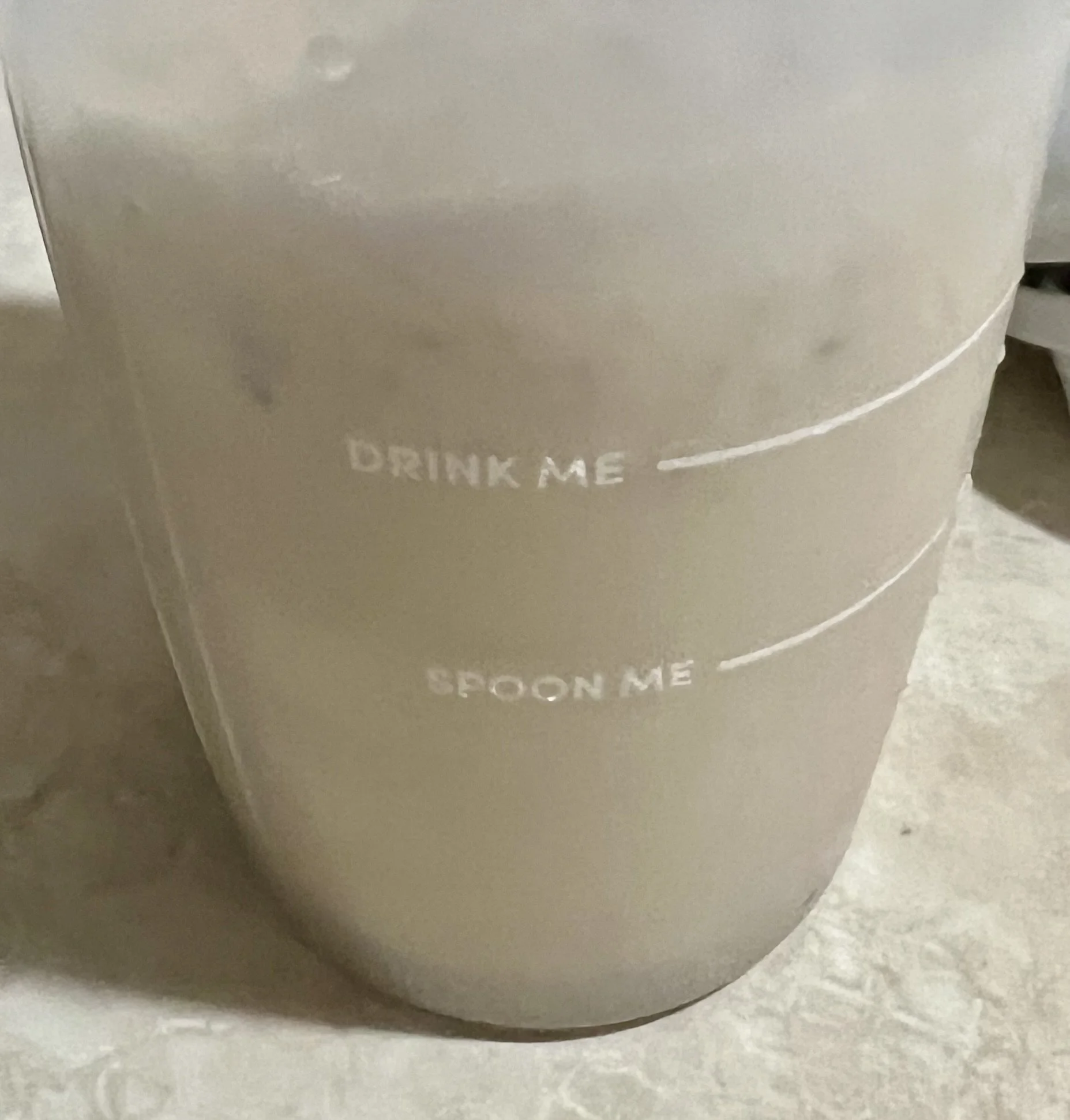
It appears that if you use 5 oz of milk, with the packet, you get a spoon-able mixture, and if you use 8 oz, it is drink-able. I went with an 8 oz Boost Protein carton. That made it a little thick for drinking. But, I probably got a full day’s worth of protein and fiber in just my breakfast.
It was tasty enough, and very, very, filling. However, I don’t think I like the way it leaves the mouth and tongue feeling like I spray painted in there. Thick coat that even my Mtn Dew had trouble clearing away. I’ll give the concept a try for a couple weeks — there were 16 packets in the variety box — and see if I like how it makes me feel later in the day. It should be healthier than cereal each morning.
Oh, I should add I did get to the dentist this week. Lots of impressions and X-rays. I hate the play-doe and clay stuff they use for impressions. I swear every time they pull the stuff out, they loosen two more teeth. And I am removing bits of that crap for days afterwords. I don’t know what was more painful, the impressions, or paying $5200+ in fees. Anyhow, I go back in 3 weeks for the fitting of the crowns. Hopefully they are correct the first time. That would be nice for a change. And then, I could be ready for the rest of the year to Enjoy Life